
Food Network Star Alex Guarnaschelli Shows Off Emerald Engagement Ring
Celebrity chefs Alex Guarnaschelli and Michael Castellon have taken their relationship to the next level — and the Food Network star has a dazzling ring to prove it.

Guarnaschelli took to Instagram on Saturday to show off her new emerald-and-diamond engagement ring and post the simple caption, "Ok @chefmike808, you’re on!" She punctuated the post with an engagement ring emoji.
Castellon, who is best known for winning Season 35 of Chopped, popped the question on Guarnaschelli’s birthday.
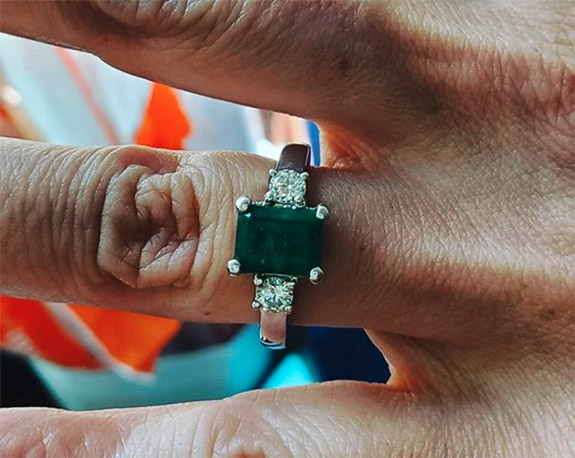
He also posted a photo of his fiancée's ring on his Instagram page. Instead of a standard caption, he strung together a series of hashtags, when combined, spelled out his sentiments. He wrote, "#she #said #yes engaged #boom #luckiest #guy #ever #happy #happy And #happy #bday @guarnaschelli"
Guarnaschelli revealed in a People magazine story that her boyfriend of four years delivered his surprise proposal after convincing her that he had spotted a baby deer near the side of the road. They had just finished a grocery run when he pulled the car over so they could take a closer look.
She told People, “So he's like, 'Shh. Come see it. It's so cute.' And I'm like, 'We're going to have to do something. We're going to have to call the animal welfare.' I'm already rolodexing the situation… And he goes, 'There's no deer.' I turn, and I look and he's on one knee. And he said, 'There's no deer.' He's like, 'This is why I have to marry you because you just believe me every time.' He said, 'Will you marry me?' and he gave me the ring."
The white-metal ring is set with a large emerald-cut emerald flanked by round, white accent diamonds. Guarnaschelli, who is the executive chef of Butter in New York City and has appeared on the Food Network's Chopped, Iron Chef America, All Star Family Cook-off, Guy's Grocery Games, and The Best Thing I Ever Ate, revealed on her IG stories that the ring is a Castellon family heirloom.
Affectionately called Chef Mike, Castellon appeared on Guy's Grocery Games and Iron Chef America. He is also an executive chef in New York City.

The couple met four years ago when Guarnaschelli dined at the restaurant where Castellon was working. Apparently, it was love at first sight.
"I went in to meet him and tell him the steak was delicious and that was it," she told People.
Guarnaschelli also dished that she and her fiancé are in no hurry to tie the knot, but when they do, it will be "a blowout" in the New York City area.
"I want a tri-state rager," she said.
Credits: Images via Instagram/guarnaschelli; Instagram/chefmike808.
Smithsonian Gem Gallery Tour Takes a Close Look at the 'Gifts from Napoleon'
An exhibit titled "Gifts from Napoleon" is the subject of today’s virtual tour of the Smithsonian’s National Gem Collection. Two very special pieces gifted by the French emperor to his second wife, Marie-Louise, are prominently featured in a wall case on the second floor of the Janet Annenberg Hooker Hall of Geology, Gems, and Minerals. One is a majestic silver and gold necklace set with diamonds weighing 263 carats and the other is a diadem glistening with 540 carats of turquoise and 700 carats of diamonds.
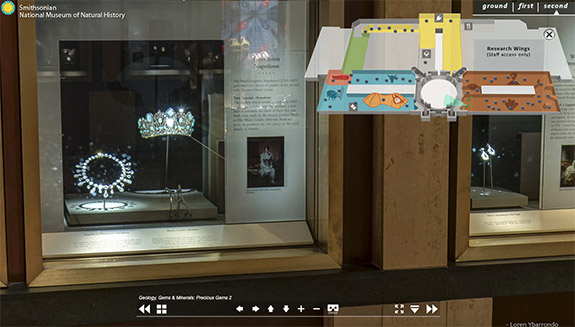
Normally, the hall hosts more than six million visitors annually. But with all the Smithsonian museums in Washington, DC, temporarily closed to support the effort to contain the spread of COVID-19, we’ve been offering these virtual tours. Previous stops on the tour have included the colorful “Stars and Cat’s Eyes” exhibit, the Logan Sapphire, the Dom Pedro aquamarine, the Steamboat tourmaline and a collection of enormous topaz.
Here’s how to navigate to the “Gifts from Napoleon” exhibit.
– First, click on this link… The resulting page will be a gallery called “Geology, Gems & Minerals: Precious Gems 1.”
– Click the double-right arrows once to navigate to the gallery called “Geology, Gems & Minerals: Precious Gems 2.”
– Click and drag the screen 180 degrees so you can see the back wall of cases.
– Touch the Plus Sign to zoom into the exhibit titled “Gifts from Napoleon.”
(You may touch the “X” to remove the map. This will give you a better view of the jewelry. You may restore the map by clicking the “Second” floor navigation on the top-right of the screen.)
A wall panel next to the exhibit explains how Napoleon gifted the jewelry to Empress Marie-Louise: "The diadem was a wedding present in 1810. Napoleon gave his wife the necklace a year later to celebrate the birth of their first son. Both were made by Etienne Nitôt and Sons of Paris. Louise, who was Austrian born, bequeathed the two pieces to the royal family of Austria."
We've got all the details below...

Empress Marie-Louise Diadem features 70 cabochons of Persian turquoise and 1,006 old mine-cut diamonds. Interestingly, the emperor’s wedding gifts — which had included matching earrings and a jewel-encrusted comb — were originally set with emeralds.
According to the Smithsonian, Marie-Louise (1791-1847) bequeathed the diadem and matching pieces to her Hapsburg aunt, Archduchess Elise. In 1953, Van Cleef & Arpels acquired the jewelry from one of Elise’s descendants, the Archduke Karl Stefan Hapsburg of Sweden.
During the next two years, the jeweler removed the emeralds from the diadem and sold them individually in other pieces of jewelry. Its advertising campaign at the time promised “An emerald for you from the historic Napoleonic Tiara…”
Some time between 1956 and 1962, Van Cleef & Arpels reset the diadem with sky blue turquoise. The new-look diadem was exhibited at the Louvre Museum in Paris along with the necklace, earrings and comb, as part of a special exhibition in 1962 focusing on the life of Empress Marie-Louise.
American socialite Marjorie Merriweather Post (1887-1973) purchased the diadem and donated it to the Smithsonian in 1971.
(The Smithsonian clarified that a diadem is the type of crown that is not a complete circle. It usually goes three-quarters around and is open in the back.)

The Napoleon Diamond Necklace celebrated the birth of Napoleon II, the future Emperor of Rome, in 1811. The necklace consists of 234 diamonds, with the inner circle made up of 28 old mine-cut diamonds, suspending a fringe of nine "pendeloques" (five pear shapes alternating with four ovals) and 10 briolettes. Mounted above each pear shape is a small round brilliant diamond, while the four ovals are attached to motifs decorated with 23 smaller diamonds. Each of the 10 briolette mountings is accented with 12 rose-cut diamonds.
When Marie-Louise died in 1847, the necklace was given to her sister-in-law, Archduchess Sophie of Austria.
According to the Smithsonian, the necklace was bequeathed in 1972 to the Archduchess’ son, Archduke Karl Ludwig of Austria. The necklace remained in the Hapsburg family until 1948, when Archduke Ludwig’s grandson, Prince Franz Joseph of Liechtenstein, sold it to a French collector who, in turn, sold it to Harry Winston, Inc., in 1960.
Merriweather Post — who clearly had an affection for Napoleonic jewelry — acquired the necklace, in its original case, from Winston and donated it to the Smithsonian in 1962.
Credits: Photos by Chip Clark/Smithsonian, digitally enhanced by SquareMoose.
NBA Players Encouraged to Wear Diagnostic 'Smart Ring' When Season Resumes
In an effort to quickly identify health risks when the NBA season resumes in Orlando on July 30, league officials are encouraging its players to wear a lightweight, titanium “smart ring.”

The rings made by Finnish company, Oura, are equipped with censors that can detect changes in the players' body temperature, heart rate, sleeping patterns and respiratory rate — and most importantly, provide early warning signs if a player is in danger of contracting the coronavirus.
Scientists at the West Virginia University Rockefeller Neuroscience Institute (RNI) claim the Oura rings can detect COVID-19 related symptoms (fevers, coughing, breathing difficulties, fatigue and others) up to three days before they show up.
The claim is based on an initial study by RNI that included more than 600 physicians, nurses, urgent care providers and others directly working to care for patients with COVID-19 in West Virginia. The study's second phase will include an additional 10,000 participants across the United States, including New York and California, according to RNI.
The wearable technology is synched to RNI's smartphone app, which runs the data through a complex algorithm that promises to identify at-risk individuals before they become contagious, with 90% accuracy.
Pro basketball players will be given the option of wearing the ring when they finish up the 2019-2020 NBA season at the ESPN Wide World of Sports facilities in Orlando, Fla.
RNI believes the Oura ring could provide health benefits far beyond the NBA.
"This technology can potentially serve as a critical decision making tool to help contain the spread of the virus, safely re-open communities, strengthen the economy, and facilitate public health containment strategies," RNI noted in a press release.
“We are hopeful that Oura’s technology will advance how people identify and understand our body’s most nuanced physiological signals and warning signs, as they relate to infectious diseases like COVID-19,” added Harpreet Rai, CEO of Oura Health.
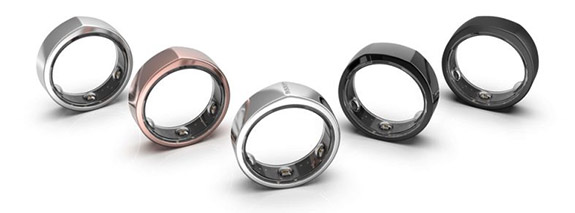
The Oura rings retail from $299 and $399 and are available in a number of metal colors.
Credit: Photos by Oura.
Music Friday: 19-Year-Old Faouzia Cries 'Tears of Gold' in Her Viral 2019 Release
Welcome to Music Friday when we bring you great new songs with jewelry, gemstones or precious metals in the title or lyrics. Today, Canadian-Moroccan singer-songwriter Faouzia uses precious metals to tell the story of unrequited love in her viral 2019 release, "Tears of Gold." The official YouTube video has been viewed more than 6.8 million times.

Faouzia explained to the music website Genius that since she was six years old she has found herself in a series of one-sided relationships. She would give and give and give and get nothing back. Her mom warned her that she'd be hurt in the end, but Faouzia could never escape the cycle.
As she penned the song, Faouzia needed a visual representation of her emotional pain. The answer: Tears of Gold.
"I wanted it to be a powerful statement," she said. "I didn't just cry for you. It wasn't just water, salts and urea. It was GOLD. I gave my literal ALL to you."
She sings, "Don't you know that I cried tears of gold for you / I sit here poor for you / Collect my pennies and my dimes / That's why you love it when I cry."
In the next line, Faouzia employs a second precious metal: platinum.
She sings, "Platinum love for you / I'd give no less for you / Generosity's my enemy / So I'm broke and your heart's rich / Because of me."
The 19-year-old explained in her Genius interview that she literally Googled the question, "What is the most valuable element," and she came up with platinum as the answer.
"On the whole 'Tears of Gold' thing, I cried for you and also gave you platinum love," she said. "It wasn't just any kind of love. It was platinum."
Born Faouzia Ouihya in 2000 in Casablanca, Morocco, the artist moved to Manitoba, Canada, with her family at the age of five.
Between the ages of 15 and 17, Faouzia won a series of singing and songwriting competitions, eventually leading to a contract with Paradigm Talent Agency. In 2018, French DJ and producer David Guetta invited Faouzia to perform on his studio album, titled 7.
Just recently, 13-year-old Daneliya Tuleshova delivered an impressive cover of Faouzia's "Tears of Gold" on America's Got Talent.
Commenting on the youngster's performance, Faouzia told ET Canada that she had goosebumps the entire time Tuleshova was on stage.
"Her voice and stage presence were AMAZING," Faouzia said. "I can’t wait to see her journey through music.”
Please check out the video of Faouzia performing "Tears of Gold." And, as a bonus, we have a video of Tuleshova's cover, as well. As always, the lyrics are below if you'd like to sing along...
"Tears of Gold"
Written and performed by Faouzia.
Mama always told me that I was too naive
Gave away my trust for pennies
I said, "Don't you worry"
Didn't think that I'd be broken down and crying
Help me
Wrecked? Check
Heart? In debt
All you do is come around
Just came here to collect
Wrecked? Check
Heart? In debt
Don't you know that I cried tears of gold for you
I sit here poor for you
Collect my pennies and my dimes
That's why you love it when I cry
Platinum love for you
I'd give no less for you
Generosity's my enemy
So I'm broke and your heart's rich
Because of me
Know that this is my fault
Gave a little too much
Knew that this was gonna happen
But I'm not gonna lie
You can make me cry
A thousand times
I come running back like
What is going on with my head?
Wrecked? Check
Heart? In debt
All you do is come around
Just came here to collect
Wrecked? Check
Heart? In debt
Don't you know that I cried tears of gold for you
I sit here poor for you
Collect my pennies and my dimes
That's why you love it when I cry
Platinum love for you
I'd give no less for you
Generosity's my enemy
So I'm broke and your heart's rich
Because of me
And the worst part is I'd do it all over again
No, the worst part is I know it's never gonna end
I keep coming right back like a maniac
I keep coming right back like –
Oh, oh
And the worst part is I'd do it all over again
No, the worst part is I know it's never gonna end
I keep coming right back like a maniac
I cried tears of gold for you
I sit here poor for you
Collect my pennies and my dimes
That's why you love it when I cry
Platinum love for you
I'd give no less for you
Generosity's my enemy
So I'm broke and your heart's rich
Because of me
Bonus: Daneliya Tuleshova covers Faouzia's "Tears of Gold"...
Credit: Screen capture via Youtube.com.
Sotheby's Marks Return to Live Auctions With Pair of Heart-Shaped Diamonds
A gorgeous pair of fancy-colored heart-shaped diamond rings — one blue, one pink and each valued at more than $7 million — will headline Sotheby's Magnificent Jewels sale on July 10 in Hong Kong. The event marks Sotheby's first live jewelry auction in Asia since the COVID-19 outbreak.

A symbol of love and affection, the heart is among the rarest and most difficult shapes to cut for diamonds. That's one of the reasons why these rings carry a premium price.
The first ring, which is expected to sell in the range of $7.7 million to $9.7 million, features a 5.04-carat fancy vivid blue diamond flanked by white diamond side stones on a white precious metal band.
An internally flawless 4.49-carat fancy vivid pink diamond is the stunning center stone of the companion ring (to be offered separately). The pink diamond is set in white precious metal and accented with white diamond side stones. The ring carries a high estimate of $8.8 million.
In total, Sotheby's Hong Kong will be presenting more than 200 lots at the Hong Kong Convention and Exhibition Centre. In addition to the fancy-color diamond heart rings, the sale includes an exceptional pair of emerald and diamond earrings from Harry Winston, the famed "Zip" necklace from Van Cleef & Arpels, as well as a perfectly matched pair of heart-shaped diamonds...

• Famed jeweler Harry Winston designed these teardrop-shaped Colombian emerald earrings. The emeralds weigh 18.69-carats and 20.27 carats, respectively, and are framed with a cascade of marquise-shaped white diamonds. Sotheby's expects the pair to fetch between $1.5 million and $1.9 million.

• Conceived by the Duchess of Windsor in the 1930s, the now-iconic "Zip" design was brought to life by Van Cleef & Arpels in 1950. According to Sotheby's, the Zip design elevated a functional item into a technically brilliant and glamorous jewel, which could be worn open as a necklace or closed as a bracelet. The Zip necklace shown here carries a high estimate of $451,000.
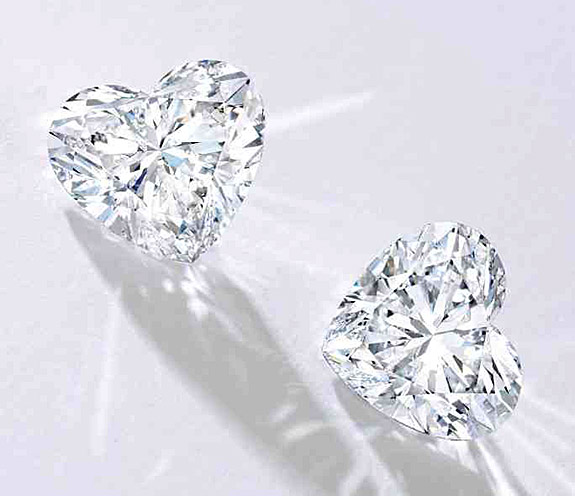
• These unmounted heart-shaped diamonds are perfectly matched — with each weighing exactly 10.51 carats. The beautiful stones are expected to sell in the range of $1.8 million to $2.1 million.
Each of the items in the sale will be on public display in Hong Kong from July 5 to July 9.
Credits: Images courtesy of Sotheby's.
Biblical Aaron Wore a Golden Breastplate Fashioned With 12 Inscribed Gemstones
The biblical Aaron may have been the original King of Bling. More than 3,300 years ago, the first high priest of the Hebrews (and older brother of Moses) dazzled his followers with a gleaming breastplate fashioned with gemstones representing the 12 tribes of Israel. The inscribed gems — which included emerald, sapphire, amethyst and topaz — were arranged in four rows and set in gold.

According to The Book of Exodus, Aaron bore the responsibility of memorializing upon his two shoulders the names of the 12 tribes before the Lord. His ceremonial costume consisted of a linen tunic spun with gold threads and a floor-length tasseled robe. Set into the breastplate were a colorful array of precious stones inscribed with the names of the 12 tribes.
The breastplate was attached to the ephod (a sleeveless garment) by gold chains/cords tied to the gold rings on the ephod’s shoulder straps, and by blue ribbons tied to the gold rings at the lower parts of the ephod.

First-century Jewish historian Josephus described Aaron’s breastplate in his book titled, Antiquities of the Jews. In the following passage, the gems are listed right to left.
“Twelve stones were there also upon the breastplate, extraordinary in largeness and beauty,” Josephus wrote. “The first three stones were a sardonyx, a topaz, and an emerald. The second row contained a carbuncle, a jasper and a sapphire. The first of the third row was a ligure (possibly orange zircon), then an amethyst, and the third an agate… the fourth row was a crysolite, the next was an onyx, and then a beryl.”
“And Aaron shall bear the names of the Children of Israel in the breastplate of judgment upon his heart, when he goeth in unto the Holy Place.” — EXODUS xxviii.12,29.
Over many centuries, reinterpretations of the original Hebrew text have yielded other gemstone combinations. Some believe this to be the more accurate arrangement…
“The first was a row of ruby, topaz, and emerald; and the second row, a turquoise, a sapphire and a diamond; and the third row, a jacinth, an agate, and an amethyst; and the fourth row, a beryl, an onyx, and a jasper.”
Aaron’s priestly dress also contained a small pocket for “urim and thummim,” mysterious and still undefined substances or articles that would help the priest determine God’s will.

“Urim and thummim” might have been two sticks or two stones, one white and the other black, that would reveal a yes or no answer to a specific question when one was randomly pulled from the pocket.
Biblical scholars believe Aaron was born in 1396 BC and died in 1273 BC at the age of 123.
Credits: From top, artist’s conception of Jewish high priest wearing a breastplate in ancient Judah. Image from THE HISTORY OF COSTUME by Braun & Schneider / Public domain. Flavius Josephus by William Whiston (originally uploaded by The Man in Question on en.wikipedia.org) / Public domain. Ceramic replica of High Priest’s breastplate by Dr. Avishai Teicher Pikiwiki Israel / CC BY.


Birthstone Feature: Rare Alexandrite Looks Like an 'Emerald by Day and Ruby by Night'
Often described as an "emerald by day and ruby by night," alexandrite displays a dramatic chameleon-like color shift depending on the light source. In normal daylight, a fine alexandrite will appear bluish-green, but under lamplight or candle flame, the gem transitions to a vibrant raspberry red.
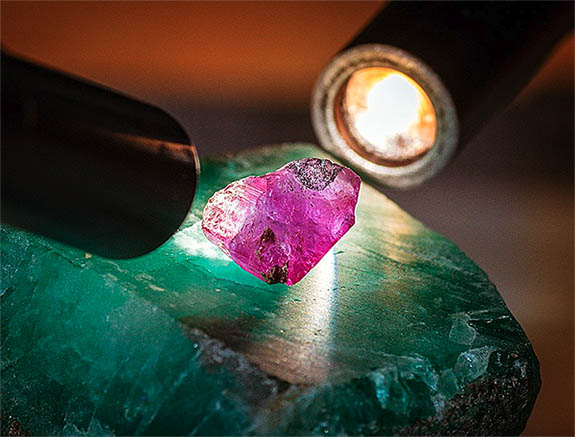
One of June's three official birthstones (the others are pearl and moonstone), alexandrite's color-changing property is attributed to the presence of chromium in the gem’s chemical makeup. The chromium allows the gem to absorb light in the yellow and blue parts of the spectrum.
Alexandrite is a relatively "new" gemstone, as it was originally discovered in 1830 in the Ural Mountains of Russia. Gem legend states that Finnish mineralogist Nils Gustaf Nordenskiöld (1792-1865) received a mineral sample from Count Lev Alekseevich Perovskii (1792-1856) that seemed very much like an emerald. But when the mineralogist inspected the gem under candlelight, the green gem had turned red.
The Smithsonian noted that Nordenskiöld had intended to name the new variety of chrysoberyl “diaphanite,” but the Count renamed it “alexandrite” to curry favor with the Russian royal family and Czar Alexander II, who had just come of age.
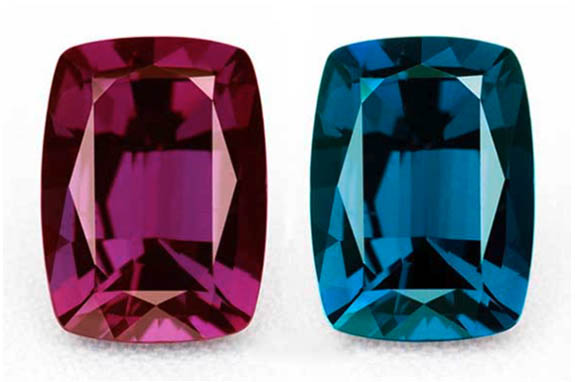
The color-change gem is rarely found in sizes larger than 5 carats, which makes the existence of the 17-carat “Whitney Alexandrite" that much more remarkable. The cushion-cut gem was a gift from Smithsonian benefactor Coralyn Whitney in 2009.
Alexandrite is extremely rare and the best-quality material is still mined in Russia. Other sources include Brazil, Sri Lanka, Tanzania, Madagascar, Zimbabwe, India and Burma.
The American Gem Society reports that due to its scarcity, fine alexandrite is more valuable than most gemstones, including rubies and diamonds.
Alexandrite has a hardness rating of 8.5, which makes it suitable for everyday wear.
Alexandrite joined the official birthstone list when it was updated in 1952. Also added that year were citrine, tourmaline and zircon. In 2002, tanzanite was honored as a birthstone for December and, in 2016, spinel joined peridot as a birthstone for August.
Source: Image by Александр Рудный / CC BY.

Proceeds From Sale of Anna Hu's Heart Ensemble to Support Healthcare Workers
From July 3 to 13, a three-piece collection of heart-themed jewelry designed by Anna Hu will be auctioned online by Christie's, with proceeds going to support healthcare workers fighting the global pandemic.

Hu created these unique pieces exclusively for this charity project using rich brown diamonds mined by Alrosa in Yakutia, a region in the Siberian Far East.
“Many people are in distress, and no one can remain indifferent to this pandemic. The world needs positivity, empathy, a sense of support, care and love," Hu said in a statement. "I hope to express all these feelings in my three pieces of jewelry. I was inspired and grateful to have received the opportunity to work on something larger than simply beautiful jewelry, something meaningful and with heart.”
The pieces will be sold by Diamonds That Care, the newly launched social responsibility initiative of Alrosa, the world’s largest diamond mining company. The initiative’s key theme is that every diamond should help those in need. The project is being organized in cooperation with the non-profit charitable organization Diamonds Do Good.
"By working with Christie’s, which operates in all the regions affected by the coronavirus, and the brilliant Chinese jewelry artist Anna Hu, we are raising funds for a US-based charitable organization supporting activities in various countries," noted Sergey Ivanov, CEO of Alrosa. "This project is a living example of how countries and stakeholders can unite in their efforts to help those in need."
Hu's three-piece ensemble includes a necklace, ring and a pair of earrings.
• The necklace (at top) features fancy colored and colorless diamonds, centered by a 27.02-carat fancy brown-yellow pear-shaped diamond weighing 27.02 carats. The necklace — which flows in a unique heart shape — is fabricated with a combination of 18-karat white and rose gold.
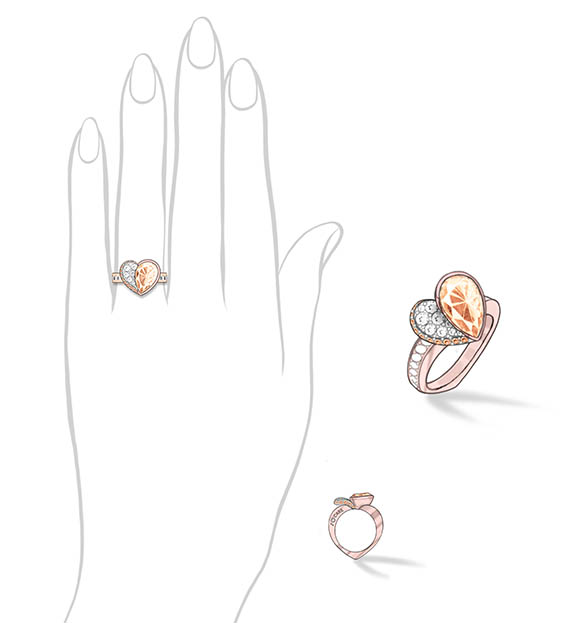
• Complementing the necklace is a heart-shaped ring that also uses a combination of fancy colored and colorless diamonds. One side of the heart features small, pavé-set colorless diamonds while the other side is highlighted by a pear-shaped, 1.59-carat faint brown diamond.
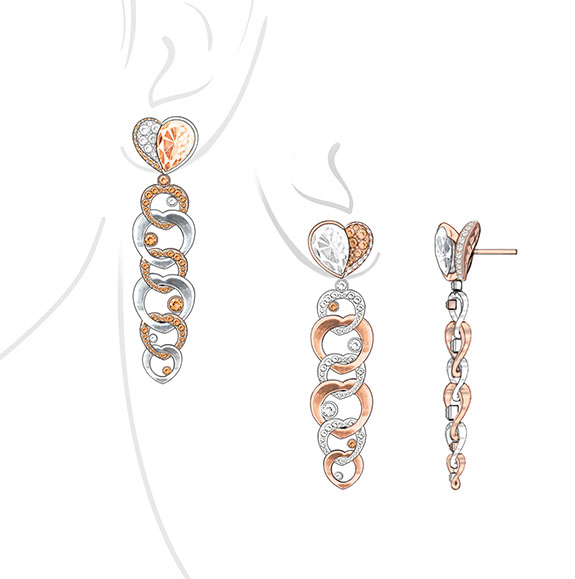
• Hu's unique earring drops include six interlocking hearts of alternating 18-karat white and rose gold. These, too, are set with fancy colored and colorless diamonds. The left earring uses brown diamond pavé and is highlighted by a 3-carat, pear-shaped brown diamond, while the right earring uses colorless pavé and is set with a 3-carat, pear-shaped colorless diamond.
“Anna Hu’s works are characterized by elegant forms and color combinations," said Max Fawcett, Christie’s Jewelry Specialist. "They are rarely sold at auction and when her pieces come to the secondary market, demand is high. As an artisan jeweler, Anna produces no more than 30 pieces a year, each a unique creation. Her involvement will create international excitement and we are pleased to offer our leading online platform and engage with our international clients to bid for this worthy cause.”
Credits: Sketches by Anna Hu provided by ALROSA.
Music Friday: Tommy Proposes With a Class Ring in 1991's 'She's in Love With the Boy'
Welcome to Music Friday when we bring you awesome songs with jewelry, gemstones or precious metals in the title or lyrics. In Trisha Yearwood's chart-topping single, "She's In Love With the Boy," the parking lot of a Tastee-Freez is the setting for the class-ring marriage proposal of a smitten teen.

Written by Jon Ims and released on Yearwood's self-titled debut album in 1991, "She's In Love With the Boy" chronicles the love story of Katie and Tommy — teenage sweethearts living in a one-horse town. Tommy loves speeding around town in his beat-up pickup truck.
Katie's dad isn't impressed by the young man's showboating, claiming, "When it comes to brains, he got the short end of the stick."
Still, Katie doesn't care what her dad thinks. She'd follow Tommy anywhere. Even if they have to run away together, "she's going to marry that boy someday."
Katie finally gets her wish when her lovestruck boyfriend proposes after a romantic evening at a drive-in movie.
Yearwood sings, "Later on outside the Tastee-Freez / Tommy slips something on her hand / He says my high school ring will have to do / 'Til I can buy a wedding band."
Katie's dad is furious when Tommy and Katie come sneaking up the walk at half past 12. He orders Katie to go to her room and is just about to give Tommy a piece of his mind when Katie's mom intervenes. She reminds her husband that he and Tommy are very much alike. Her own father disapproved of their relationship and mocked her then-boyfriend as a hay-seed plowboy who didn't have a row to hoe.
"But he was wrong and, honey, you are too," Yearwood sings. "Katie looks at Tommy like I still look at you."
When "She's In Love With the Boy" topped the U.S. Billboard Country chart, Yearwood became the first female singer to reach #1 with her debut single. The song would help rocket her to stardom.
Patricia Lynn “Trisha” Yearwood was born in 1964 in Monticello, Ga., to a school teacher mom and a banker dad. She got her big break as a 21-year-old when she interned for — and was then hired by — MTM Records, which was founded by the late Mary Tyler Moore. While working for MTM, Yearwood sang background vocals for new artists, including Garth Brooks.
“I got work based on the fact that I showed up on time, I worked cheap, I knew the songs when I got there and I sang on pitch,” Yearwood told People magazine in 2015.
The 55-year-old Yearwood has been a cast member of the Grand Ole Opry since 1999. Her work has earned three Grammy Awards, three awards from the Academy of Country Music and three awards from the Country Music Association. She has sold more than 15 million albums worldwide.
In 2005, she married Brooks, her longtime friend and collaborator. Brooks admitted on The Ellen Show that there had always been an undeniable chemistry between the pair.
Her Food Network cooking show, Trisha's Southern Kitchen, won a 2013 Daytime Emmy for Outstanding Culinary Program and is now in its 12th season.
Please check out Yearwood’s live performance of "She's In Love With the Boy." The lyrics are below if you’d like to sing along…
"She's In Love With the Boy"
Written by Jon Ims. Performed by Trisha Yearwood.
Katie's sittin' on the old front porch
Watchin' the chickens peck the ground
There ain't a whole lot goin' on tonight
In this one-horse town
Over yonder comin' up the road
In a beat-up Chevy truck
Her boyfriend Tommy, he's layin' on the horn
Splashin' through the mud and the muck
Her daddy says he ain't worth a lick
When it comes to brains, he got the short end of the stick
But Katie's young and man, she just don't care
She'd follow Tommy anywhere
She's in love with the boy
She's in love with the boy
She's in love with the boy
And even if they have to run away
She's gonna marry that boy someday
Katie and Tommy at the drive-in movie
Parked in the very last row
They're too busy holdin' on to one another
To even care about the show
Later on outside the Tastee-Freez
Tommy slips something on her hand
He says my high school ring will have to do
'Til I can buy a wedding band
Her daddy says he ain't worth a lick
When it comes to brains, he got the short end of the stick
But Katie's young and man, she just don't care
She'd follow Tommy anywhere
She's in love with the boy
She's in love with the boy
She's in love with the boy
And even if they have to run away
She's gonna marry that boy someday
Her daddy's waitin' up 'til half past twelve
When they come sneakin' up the walk
He says young lady get on up to your room
While me and Junior have a talk
Mama breaks in, says don't lose your temper
It wasn't very long ago
When you yourself was just a hay-seed plowboy
Who didn't have a row to hoe
My daddy said you wasn't worth a lick
When it came to brains you got the short end of the stick
But he was wrong and, honey, you are too
Katie looks at Tommy like I still look at you
She's in love with the boy
She's in love with the boy
She's in love with the boy
What's meant to be will always find a way
She's in love with the boy
She's in love with the boy
She's in love with the boy
What's meant to be will always find a way
She's gonna marry that boy someday
She's in love with the boy
Credit: DOD photo by U.S. Navy Petty Officer 1st Class Chad J. McNeeley / Public domain.

Smithsonian Gem Gallery Tour Arrives at the Colorful 'Stars and Cat's Eyes' Exhibit
Today's virtual tour of the Smithsonian’s National Gem Collection delivers an up-close and personal look at the colorful "Stars and Cat's Eyes" exhibit, starring the "Rosser Reeves Ruby," "Star of Asia Sapphire" and the "Maharani Cat's Eye."
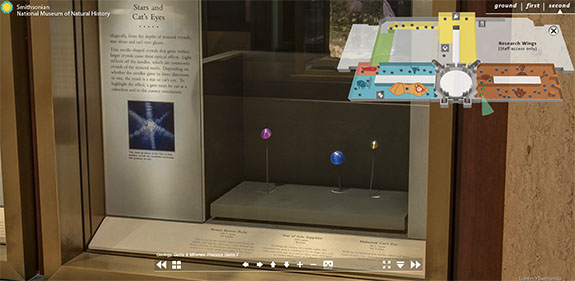
Occupying a wall case on the second floor of the Janet Annenberg Hooker Hall of Geology, Gems, and Minerals, the exhibit describes the fascinating natural phenomenon that produces star rubies, star sapphires and cat's eye chrysoberyl.
Normally, the hall hosts more than six million visitors annually. But with all the Smithsonian museums in Washington, DC, temporarily closed to support the effort to contain the spread of COVID-19, we’re offering the next best thing.
Previous stops on the tour have included the Logan Sapphire, the Dom Pedro aquamarine, the Steamboat tourmaline and an amazing topaz exhibit.
Here’s how to navigate to the "Stars and Cat's Eyes" exhibit.
- First, click on this link… The resulting page will be a gallery called “Geology, Gems & Minerals: Precious Gems 1.”
- Click the double-right arrows once to navigate to the gallery called "Geology, Gems & Minerals: Precious Gems 2."
- Click and drag the screen 90 degrees so you can see the wall cases to the right.
- Touch the Plus Sign to zoom into the exhibit titled "Stars and Cat's Eyes."
(You may touch the “X” to close the map to get a better view of the gemstones. You may restore the map by clicking the “Second” floor navigation on the top-right of the screen.)
A wall panel next to the exhibit describes what make the "stars shine and the cat's eyes gleam."
"Tiny needle-shaped crystals that grew within larger crystals cause these optical effects. Light reflects off the needles, which are commonly crystals of the mineral rutile," says the panel. "Depending on whether the needles grew in three directions or one, the result is a star or cat's eye. To highlight the effect, a gem must be cut as a cabochon and in the correct orientation."
Here's more information about the featured gemstones...

The Rosser Reeves Ruby
Carried around for years as a good luck charm by 1950s TV advertising pioneer Rosser Reeves, the 138.72-carat gemstone that bears his name is the largest and finest star ruby the world has ever known.
Before donating it to the Smithsonian in 1965, Reeves called the stone “my baby” and made it his constant companion. The advertising executive, who penned the M&Ms slogan, “Melts in your mouth, not in your hand,” was one of the most successful admen of his day. And he attributed much of his good luck to the beautiful scarlet stone.
Mined in Sri Lanka, the famous ruby was purchased at auction in 1953 by gem dealer Robert Fisher. At the time, it weighed 140 carats, but the asterism in the stone was slightly off center and the surface had abrasions. It was subsequently cut down to 138.72 carats to give it a prettier appearance and bring the “star” closer to the center. Reeves purchased the improved stone from Fisher’s son, Paul, in the late 1950s.

Star of Asia Sapphire
Originating from the historic Mogok mines of Burma (now Myanmar), the 330-carat blue-violet sapphire is said to have belonged to India’s Maharajah of Jodhpur and eventually obtained by famed mineral dealer and collector Martin Leo Ehrmann. The impressive gem was acquired for the National Gem Collection in 1961.
Renowned for its impressive size, intense color and sharp star, the Star of Asia is considered a phenomenal stone.
Historically, the finest and most vibrant gem-quality sapphires have come from Sri Lanka, Burma and the Kashmir region of India. The historic Mogok tract of Burma has been producing museum-quality rubies and sapphires since the 15th century.
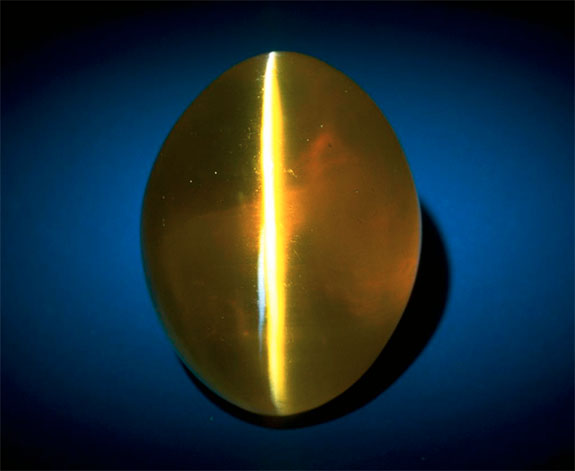
Maharani Cat's Eye
The 58.91-carat honey-colored cat's eye was also mined in Sri Lanka and is considered one of the finest gems of its kind. According to the Smithsonian, the optical phenomenon of chatoyancy (the cat's eye effect) can be displayed by many gemstones, but the most popular and highly prized is that of the mineral chrysoberyl. The Smithsonian obtained the gem in an exchange in 1961.
Credits: Photos by Chip Clark/Smithsonian. Virtual tour screen capture via naturalhistory2.si.edu.