
Smithsonian Adds 55-Carat 'Kimberley Diamond' to the National Gem Collection
The 55.08-carat, champagne-colored "Kimberley Diamond" is the newest member of the National Gem Collection. The emerald-cut gem was donated to the Smithsonian by philanthropist Bruce Stuart and went on display at the National Museum of Natural History in Washington, D.C., this past Friday.

The Kimberley Diamond has been a rock star throughout its history. The Smithsonian noted that the Kimberley was one of the most recognizable gems in the world from the 1940s through the 1960s, as it appeared in books, magazines, newspapers and popular TV shows, such as It Takes a Thief and Ironside.
It was also exhibited throughout the U.S., including a highly promoted 2013 engagement at the American Museum of Natural History in New York City.
The gem was cut from a 490-carat crystal discovered at the Kimberley Mine in South Africa in 1921. Its original weight was 70 carats, but it was recut to its current proportions in 1958 to improve its clarity and brilliance. It had been owned by a private collector since 1971 and then acquired by Stuart in 2002.
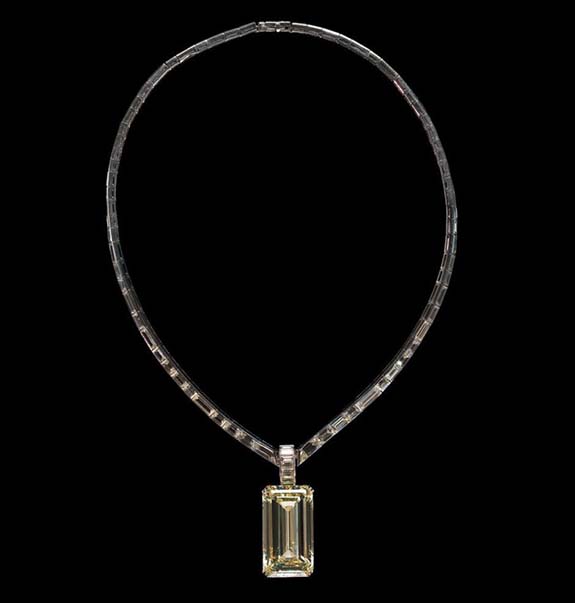
The Kimberley Diamond, which dangles from an extraordinary diamond-encrusted necklace, can be seen at the National Museum of Natural History, just a few steps from the Hope Diamond in the Hall of Geology, Gems and Minerals.
“We offer our sincere appreciation to Bruce Stuart for his generosity in making this historic gift to the nation," said Dr. Jeff Post, curator of the National Gem Collection. "It will enrich the National Collection for generations to come."
Credits: Images courtesy of the Smithsonian.
Music Friday: Dean Martin Has a Band of Gold, But No 'Wedding Bells' in His Future
Welcome to Music Friday when we like to bring you throwback songs with jewelry, gemstones or precious metals in the title or lyrics. Today, crooner Dean Martin sings about a little band of gold in his cover of "Wedding Bells," a song first made famous by country legend Hank Williams exactly 70 years ago.
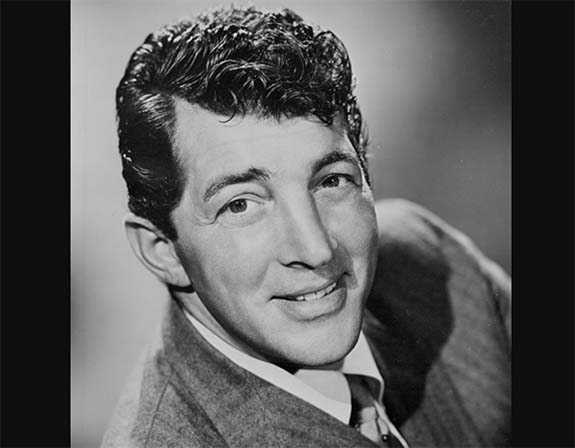
In the song, Martin portrays a young man who has just gotten an invitation to his ex-girlfriend's wedding. Not only is he heartbroken by the thought of her marrying another man, but he reveals that he had been all set to pop the question.
He sings, "I planned a little cottage in the valley / And I even bought a little band of gold / I thought someday I'd place it on your finger / But now the future looks so dark and cold."
In the end, Martin laments that wedding bells will never ring out for him.
Although the official writing credit for "Wedding Bells" is attributed to guitarist Claude Boone, country music historian Colin Escott wrote that Boone actually purchased the song for $25 from James Arthur Pritchett, a musician who performed under the name Arthur Q. Smith. Twenty-five dollars in 1949 is equivalent to about $300 today.
It turned out to be a great investment for Boone. The song was recorded by some of the biggest names in the music business, including Williams (1949), Hank Snow (1957), Marty Robbins (1958), George Jones (1962), Martin (1965), Jerry Lee Lewis (1967), Charlie Rich (1967), Bill Anderson (1968), Conway Twitty (1971), Glen Campbell (1973) and Lissie (2009).
Of all the versions of "Wedding Bells" posted to YouTube, we like Martin's the most. The song is included as the last track on his album titled Dean Martin Hits Again.
Born Dino Paul Crocetti in Steubenville, Ohio, in 1917, Martin’s first language was Italian and he didn’t start learning English until he entered school at the age of five. His lack of English skills made him a target of neighborhood bullies. He dropped out of school in 10th grade because he believed he was smarter than his teachers. The teenager made ends meet by bootlegging liquor, working in a steel mill and dealing blackjack at a speakeasy. He also became a welterweight boxer.
Martin moved to New York City, where he worked as a croupier in an illegal casino behind a tobacco shop. He called himself “Dino Martini” and started singing for local bands. He got his first big break working for the Ernie McKay Orchestra.
He would go on to record some of his generation’s most memorable tunes, including “Memories Are Made of This,” “That’s Amore,” “Everybody Loves Somebody,” “You’re Nobody Till Somebody Loves You,” “Ain’t That a Kick in the Head?” and “Volare.”
Martin passed away on Christmas Day 1995 at the age of 78. In 1996, Ohio’s Route 7 through Steubenville was rededicated as Dean Martin Boulevard.
Please check out the audio track of Martin’s cover of “Wedding Bells.” The lyrics are below if you’d like to sing along…
"Wedding Bells"
Written by Claude Boone. Performed by Dean Martin.
(Wedding bells, wedding bells)
I have the invitation that you sent me
You wanted me to see you change your name
I couldn't stand to see you wed another
But I hope you're happy just the same
Wedding bells are ringing in the chapel
That should be ringing out for you and me
Down the aisle with someone else you're walkin'
Those wedding bells will never ring for me
I planned a little cottage in the valley
And I even bought a little band of gold
I thought someday I'd place it on your finger
But now the future looks so dark and cold
Wedding bells are ringing in the chapel
That should be ringing out for you and me
Down the aisle with someone else you're walkin'
So wedding bells will never ring for me
So wedding bells will never ring for me
Credit: Image by ABC Television [Public domain], via Wikimedia Commons.

Emblazoned With 650 Diamonds, Raptors' NBA Championship Rings Are the Largest Ever
The Toronto Raptors celebrated their first-ever NBA championship Tuesday night with gigantic 14-karat yellow gold rings emblazoned with 650 diamonds weighing 14 carats. The number of diamonds and the total carat weight are records for a championship ring in any sport.
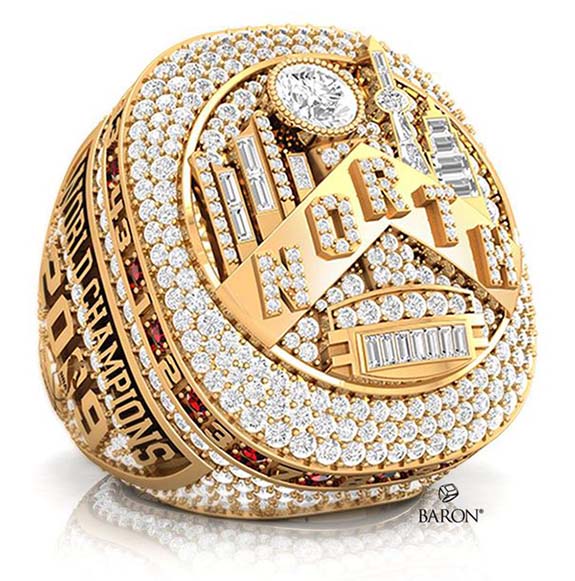
The ring also set a new record for the largest single diamond in any professional championship ring. A 1.25-carat round diamond replaces the basketball in the ring's representation of the Larry O’Brien trophy.
Representing his teammates, eight-year Raptors veteran Kyle Lowry worked with the designers at Windsor, Ont.-based Baron Championship Rings to create a special piece that would reflect the awesome accomplishments of a team that brought the Larry O’Brien trophy north of the border for the first time in NBA history.
“This isn’t just a ring for the Raptors. It’s a ring for the city of Toronto and the country of Canada,” Lowry said. “The details in the ring reflect things that are important to us and are symbolic of our championship season. I think it’s one of the best rings in the history of the NBA.”
The face of the ring is made up of 74 diamonds, representing the number of wins during the 2018-19 season. The large, bezel-set diamond in the trophy commemorates the team’s first NBA Championship. Custom-cut baguette diamonds accentuate the iconic Toronto skyline, which includes the CN Tower and Scotiabank Arena.
The six round diamonds set above the arena represent "The Six," which rapper Drake popularized as a nickname for the city of Toronto. The modern city of Toronto was formed by the amalgamation of six municipalities.
Adding to the design is the team’s NORTH chevron jersey logo, with each letter rendered in diamonds against polished yellow gold.
Encircling the outer edge of the ring is a row of 16 genuine natural rubies along with the jersey numbers of the team roster. The rubies and numbers are situated below a graceful cascade of diamonds.
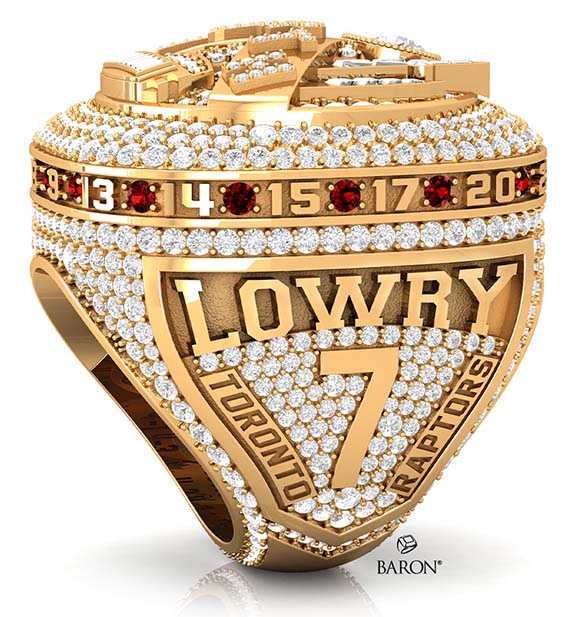
One side of the ring displays each player’s name and jersey number, while “WORLD CHAMPIONS,” the NBA logo, and the Raptors logo complete the look on the opposite side.

The inside of the ring features personalized messages unique to each player, a ruby set inside a Maple Leaf, and the championship series scores.

“The Raptors’ first NBA championship is a moment that basketball fans across the country, and the franchise itself, waited 24 years for and we are incredibly proud to mark the occasion for the players, coaches and staff who made it possible with this stunning championship ring,” said Larry Tanenbaum, Chairman of Maple Leaf Sports & Entertainment. “This championship made history and will be treasured forever as will this ring commemorating the achievement.”
All the gold and diamonds used to create the Raptors’ 2019 World Championship Rings were sourced from Canada.
As an added bonus, each fan attending the game on opening night — about 20,000 in all — received a replica of the championship ring.
Credits: Images courtesy of Maple Leaf Sports & Entertainment and Baron Championship Rings.
GIA Commits $1.3 Million to Extend Reach of Artisanal Mining Education Project
Building on the success of a pilot project that gave small-scale miners in Tanzania new tools to evaluate the quality of rough gemstones, the GIA is committing $1.3 million to extend the program into Madagascar, Nigeria, Rwanda and Zambia.

Artisanal miners are provided with an innovative guide that illustrates how to examine and evaluate rough gemstones found in East Africa. The booklet is waterproof and comes with a durable plastic tray that can be used to sort gems and do basic gemological evaluations.
“This is a tremendous step forward in our efforts to bring information directly to artisanal miners right at the beginning of the gem and jewelry supply chain,” said GIA President and CEO Susan Jacques. “We know that this investment will bring an invaluable benefit to miners, their families and the communities in which they live.”
Working with Pact, a Washington D.C.-based international development nonprofit organization with expertise in the region, GIA plans to reach 10,000 miners.
“We found that for every dollar invested, there was a 12-fold social return that will last years into the future,” said Cristina M. Villegas, technical program manager for Pact’s Mines to Markets program. “With their new knowledge, miners improve their income, send their children to school, invest in their mines and their communities.”

First developed in English and later translated into Swahili, the photo-rich booklet titled “Selecting Gem Rough: A Guide for Artisanal Miners” was developed by the GIA research and library staff under the guidance of GIA Distinguished Research Fellow Dr. James Shigley and Dona Dirlam, then-director of the GIA library.
GIA staff, including Robert Weldon, current director of the Richard T. Liddicoat Gemological Library and Information Center at GIA and a major contributor to the development and content of the guide, trained more than 1,000 artisanal miners on how to use the guide and tray during a two-week period earlier this year in Tanzania.
“There is nothing more rewarding than seeing the reaction of the miners as they learn the material – you instantly see that you’ve positively made a change in someone’s life,” said Weldon. “These transcendent moments make us so proud that we can provide artisanal miners with a gem guide that gives them the confidence to know their value in the market.”
The broader rollout into Madagascar, Nigeria, Rwanda and Zambia will be funded through the GIA endowment.
An independent nonprofit organization, the GIA (Gemological Institute of America) is recognized as the world’s foremost authority in gemology.
Credits: Pact representative Norbert Massay, GIA Graduate Gemologist (GG) Marvin Wambua and GIA’s library director Robert Weldon instruct artisanal miners in MoroGoro, Tanzania. Photo by Pedro Padua/GIA; Robert Weldon, GIA director of the Richard T. Liddicoat Library and Information Center, is pictured with an artisanal miner from Tunduru, Tanzania. Photo by Pedro Padua/GIA.
8,000-Year-Old 'Abu Dhabi Pearl' to Make World Debut at UAE's Louvre Outpost
The 8,000-year-old "Abu Dhabi Pearl" will be making its world debut on October 30 at the Louvre Abu Dhabi, the new UAE outpost of the famous Paris museum. The natural pearl — which is said to be the world's oldest — will headline a special exhibition called “10,000 Years of Luxury.”

The iridescent gem was carbon dated to 5,800-5,600 BC, during the Neolithic period. It was discovered during excavations at Marawah Island, located 62 miles west of the capital city. Despite being privately owned, the island is rich in archeological sites. In 2004, a 7,500-year-old skeleton was found among the ruins of Neolithic buildings, along with 200 flint tools.

“The discovery of the oldest pearl in the world in Abu Dhabi makes it clear that so much of our recent economic and cultural history has deep roots that stretch back to the dawn of prehistory,” said Mohamed Al-Muabarak, the chairman of the Louvre Abu Dhabi.
Archaeologists believe that pearls from the region were held in high esteem and traded for ceramics and other goods with merchants from Mesopotamia.
A spokesperson for the Abu Dhabi Department of Culture and Tourism noted the Venetian jewel merchant Gasparo Balbi, who traveled through the region, mentioned the islands off the coast of Abu Dhabi as a source of pearls in the 16th century.
Natural pearls continued to underpin the economy of the region until the 1930s. The local pearl trade would eventually collapse due to a number of factors, including the advent of cultured pearls and conflicts that disrupted global economies.
Interestingly, the "Abu Dhabi Pearl" was loaned to the Louvre Abu Dhabi by the Zayed National Museum collection. The Zayed National Museum is scheduled to open in 2020 and is located just 3 km from the Louvre Abu Dhabi.
The Louvre Abu Dhabi was inaugurated in November 2017 by French President Emmanuel Macron, United Arab Emirates Vice President Mohammed bin Rashid Al Maktoum and Crown Prince of Abu Dhabi Mohammed bin Zayed Al Nahyan.
Credits: "Abu Dhabi Pearl" screenshot of video by the Abu Dhabi Department of Culture and Tourism. Photo of Abu Dhabi Louvre by Wikiemirati [CC BY-SA 4.0], via Wikimedia Commons.

Bridal Jewelry Stored Away for 60 Years Finally Adorns College Sweetheart's Finger
Eighty-seven-year-old Aussie Tom Susans finally got to marry his college sweetheart last weekend with bridal jewelry he had stored away for the past 60 years.
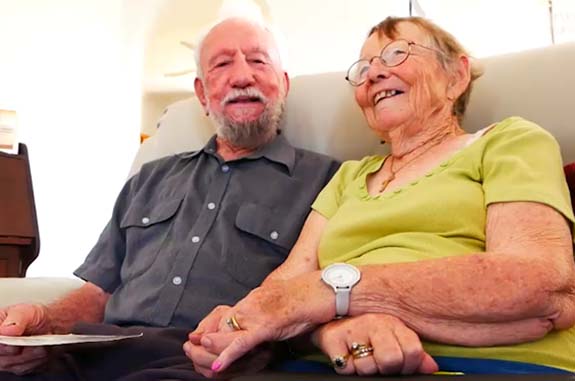
Susans and Judith Beston met at a teacher's training college in Brisbane, Australia, in 1957 and agreed to tie to knot two years later when Susans graduated and landed a good job in his field of study.
He had already purchased an engagement ring and wedding band when Beston's mum pulled the plug on the relationship. Susans was 27 at the time and Beston's mum disapproved because she felt he was far too old to be courting her 20-year-old daughter.
"I thought, 'This is good, I can get married here and Mum can help me a bit,' but at home it was really difficult," Beston told Australia's ABC network. "Mum didn't want Tom involved. She thought he was much too old for me."
Without telling Susans her plans, Beston abruptly moved from Australia to New Zealand, where she got a job as a school teacher and started a new life.
"She just disappeared," Tom told ABC. "I didn't know where she was. I couldn't find her anywhere in Australia."
A brokenhearted Susans placed the engagement ring and wedding band intended for Beston in a wooden cabinet and there's where they remained for the next 60 years.
Beston went on to marry an Englishman with whom she raised seven children. Susans married a fellow teacher and established a home in Rockhampton, Australia, where they raised four girls.
Throughout his 53-year marriage, Susans always wondered about the one who got away. He consistently attended the reunions of the Queensland University of Technology, hoping to reconnect in some way. He couldn't find her at the 30th or the 40th. At the 50th, he didn't even try.
But, when he returned from the 50th reunion he scanned through the names of the 400 attendees and, sure enough, Beston's name was on the list.
"I thought she had died," said Susans.
It was 2009 when Susans and Beston finally met face-to-face at another Golden Graduates Reunion. They had a great time catching up on each other's lives, but for the next decade they only communicated via Christmas cards.
When Susans' wife, Sylvia, passed away, he decided to correspond more frequently with Beston, who lost her husband many years earlier.
In April of this year, the two connected once again when Beston traveled to Australia to celebrate her 80th birthday.
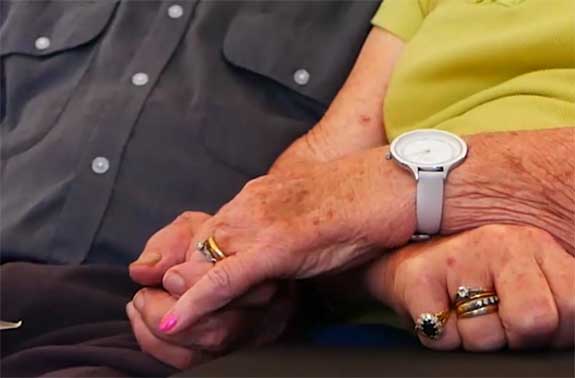
The two holidayed on the Queensland coast and this is where Susans proposed to Beston, again, with the engagement ring he had purchased in 1959.
This time, her mum wasn't around to stand in their way.
"When he asked me to marry him, I said yes straightaway," Judith told ABC.
"I thought after 60 years, it was about time she had it back — and it fitted," Susans said.
The couple officially tied the knot last weekend in an intimate ceremony attended by family and close friends.
And this past weekend, Beston proudly wore her old/new bridal jewelry as she and Susans participated in their 60th Golden Graduates Reunion.
Credits: Screen captures via abc.net.au.
Music Friday: Dion's 'Prima Donna' Wears Charms, Diamonds and Pearls Galore
Welcome to Music Friday when we bring nostalgic tunes with jewelry, gemstones or precious metals in the title or lyrics. Today, Dion's 1963 hit, "Donna the Prima Donna," shines the spotlight on a young woman who aspires to be a socialite and has an affection for the finer things in life, including jewelry and gemstones.

While Donna loves to talk about high society, she's really just a working-class girl. As Dion sings, "She always wears charms, diamonds, pearls galore / She buys them at the 5 and 10 cents store / She wants to be just like Zsa Zsa Gabor / Even though she's the girl next door."
As a poor kid from the Bronx, New York, Dion acknowledges that winning her heart will be nearly impossible, singing, "Pretty little girl, I don't stand a chance /Without any money there goes our romance."
Written by Dion and Ernie Maresca, "Donna the Prima Donna" appeared on Dion's 1963 album of the same name. The song zoomed to #6 on the U.S. Billboard Hot 100 chart and #17 on the R&B chart, and continues to get airplay 56 years after its release.
Born in 1939, Dion DiMucci developed his love for music early in life while touring with his dad, Paquale DiMucci, a vaudeville entertainer. Dion's singing style was honed on the street corners of the Bronx, where he and his buddies performed a cappella riffs.
Dion started his career in the late 1950s as the frontman for Dion and the Belmonts. He rocketed to stardom after going solo in 1960 and is best remembered for the singles "Runaround Sue," "The Wanderer," "Ruby Baby" and "Donna the Prima Donna."
Trivia: Dion also released an Italian version of "Donna the Prima Donna." The lead vocals are in Italian, but the backing vocals — provided by The Del-Satins — are identical to the original song.
Dion, who celebrated his 80th birthday in July and continues to tour, was inducted into the Rock & Roll Hall of Fame in 1989.
We hope you enjoy these clips of Dion performing "Donna The Prima Donna." (As a fun bonus, we've also included the Italian-language version.) The English lyrics are below if you’d like to sing along...
"Donna The Prima Donna"
Written by Dion DiMucci and Ernie Maresca. Performed by Dion.
Donna, Donna the Prima Donna
Broke my heart.
We're apart.
Thinks she's smart.
I met a girl a month ago
I thought that she would love me so.
But in time I realized.
She had a pair of roving eyes.
I remember the nights we dated,
Always acting sophisticated,
Talking about high society,
Then she tried to make a fool out of me.
They call her Donna, Donna the Prima Donna
Broke my heart now.
Thinks she's smart now.
We're apart now.
Pretty little girl you're just having fun
You're running all around and breaking lover's hearts.
Pretty little girl, I don't stand a chance,
Without any money there goes our romance.
She always wears charms, diamonds, pearls galore,
She buys them at the 5 and 10 cents store.
She wants to be just like Zsa Zsa Gabor,
Even though she's the girl next door.
They call her Donna, Donna the Prima Donna.
Broke my heart.
Thinks she's smart.
We're apart.
Pretty little girl you're just having fun,
You're running all around, you're breaking lover's hearts.
Pretty little girl, I don't stand a chance,
Without any money there goes our romance.
She always wears charms, diamonds, pearls galore,
She buys them at the 5 and 10 cents store.
She wants to be just like Zsa Zsa Gabor,
Even though she's Donna next door.
Donna, Donna the Prima Donna
(Repeats)
Credit:Screen capture via Youtube.com.
Midas Touch: Britain's Royal Mint Just Unveiled an 18-Karat Gold Payment Card
Britain's Royal Mint just took the concept of a "gold card" to a whole new level with the unveiling of the first-ever payment card made from 18-karat gold.

Developed in association with Mastercard and Accomplish Financial, the solid gold Raris card offers limitless spending, zero foreign exchange and no transaction fees. It also carries a $23,000 price tag.
Each Raris card is personalized with the name and signature of the accountholder engraved right into the precious metal. The card is fully customizable. Additional graphics may be added to the front and back of the card — for an additional fee.
The Royal Mint, which has produced coinage in England for more than 1,100 years, is targeting the premium product to the elite consumer who values high-quality luxury items and wants to make a statement.
Because the Raris card is part of the Mastercard World Elite package, cardholders will have access to a dedicated concierge service and other travel benefits.
In addition to being the world’s first precious metal payment card to be hallmarked by the Goldsmiths’ Company Assay Office, Raris is also the first payment card in the world to use source-traceable metals and to be certified under the Responsible Jewellery Council’s Chain of Custody.
"The Royal Mint is constantly innovating, and as the UK’s leading precious metals solutions provider, we are hugely excited to launch the solid gold Raris card in acknowledgement of growing consumer demands for unique and luxury payments cards," noted Anne Jessopp, CEO at The Royal Mint.
CNN reported that the Royal Mint's initial run will consist of 50 Raris cards with the same design. New card designs and additional runs will follow as the product gains traction.
When CNN asked Mastercard spokesman James Thorpe why anyone might want to invest in an 18-karat gold payment card, he said, "If you want something that is unique in this world, there are very few things. But this is a remarkable and valuable product."
Credit: Image courtesy of The Royal Mint.
Why Princess Diana's Engagement Ring Choice Irked the British Royal Family
Back in February of 1981, Prince Charles proposed to the 20-year-old Lady Diana with a big blue sapphire-and-diamond ring that the future princess got to pick out herself. According to the editors of Vogue, some members of the British royal family fumed at Diana's choice — not because it featured an unconventional center stone, but because it was a stock item from the Garrard catalog.
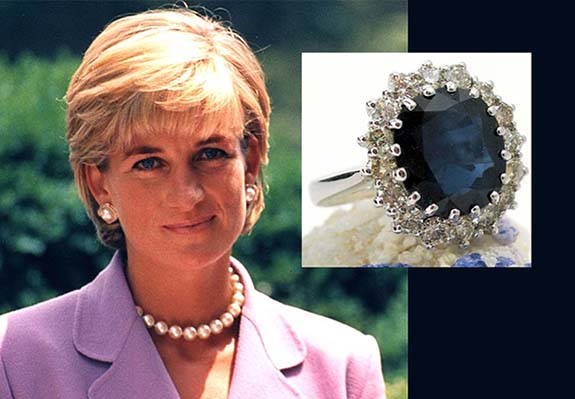
Founded in London in 1735, Garrard was the official crown jeweler of the UK from 1843 until 2007. The distinguished company that had been entrusted with the upkeep of the British Crown Jewels was the logical source for Diana's bridal jewelry.
So, in the lead-up to their engagement, the 32-year-old Prince Charles presented his bride-to-be with a bunch of design options from Garrard. Her favorite was an 18-karat white gold ring set with a 12-carat oval Ceylon sapphire surrounded by a halo of 14 round white diamonds.
In Diana's eyes, the ring was perfect. She loved it so much that she didn't request any modifications or customizations.
In the eyes of her critics and some members of the royal family, the ring was sub-standard because it was hardly unique. Critics called the Garrard stock item a "commoner's ring" because any non-royal with $60,000 to spend could purchase the exact piece.
Nevertheless, Diana's sapphire and diamond engagement ring would become one of the most recognizable and imitated engagement rings of all time. Gerrard still features a sapphire ring with a halo of 12 diamonds in its "1735 Collection." (The ring seen, above, is a replica with 16 accent stones.)
Diana wore the ring throughout her marriage and even, on some occasions, after her divorce from Prince Charles in 1996.
After Diana died tragically in 1997, her sons, then 15 and 12, were given an opportunity to select a keepsake from their mom's possessions.
Prince William picked a Cartier watch that his mom received on her 21st birthday and Harry got the sapphire engagement ring.
But, wait... Didn't Prince William famously propose to Kate Middleton in October of 2010 with his late mother's sapphire ring? Well, yes. We learned in April of this year, that the sapphire ring proposal was made possible by the selfless act of William's younger brother, Harry.
According to Diana’s former butler, Paul Burrell, the princess's ring was in Harry’s possession for 12 years. When William broke the news to his brother that he was about to propose to his long-time girlfriend, Kate, the younger brother said, “Wouldn’t it be fitting if she had mummy’s ring? Then one day that ring will be sat on the throne of England.”
William accepted his brother’s generous offer and the rest is history.
Credits: Princess Diana photo by John Mathew Smith [CC BY-SA 2.0], via Wikimedia Commons. Engagement ring replica by Ann Porteus from Tasmania, Australia [CC BY 2.0], via Wikimedia Commons.
.jpg)
.jpg)
Birthstone Feature: Black Opals From Lightning Ridge Are the World's Finest
Lightning Ridge, a small outback town in New South Wales, is the only place in Australia, and one of the few places in the world, where the highly prized black opal is found. Opals with a vivid play-of-color and a black or dark body color are classified as black opals.
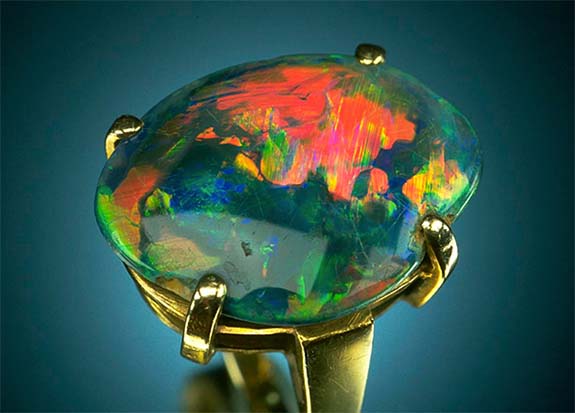
The beautiful 26.9-carat specimen, above, is an example of a black opal sourced at Lightning Ridge — a mining area that has been yielding top-quality opals since 1903. The ring was gifted to the Smithsonian in 1970 by Mrs. Oliver B. James and became part of the National Gem Collection in Washington, D.C. The cabochon-cut gem displays a variety of intense colors, including red, violet, blue, green, yellow and orange.

As one of October’s official birthstones, the precious opal is universally loved because it can present all the colors of the rainbow. Each opal is truly unique and more than 95% of the world's fine opals are sourced in Australia. Other varieties include white opals, boulder opals, crystal opals and fire opals.
As we reported earlier this year, a world-class facility dedicated to Australia’s national gemstone is taking shape at Lightning Ridge. The $24 million Australian Opal Centre will be a world-class tourism attraction and an internationally recognized hub for opal-related knowledge, training and certification.
Scientists believe that between 100 million and 97 million years ago, Australia’s vast inland sea, which was populated by marine dinosaurs, began retreating. As the sea regressed, a rare episode of acidic weather was taking place, exposing pyrite minerals and releasing sulphuric acid. As the surface of the basin dried further and cracked, silica-rich gel became trapped in the veins of the rock. Over time, the silica solidified to form opals.
In precious opal, the silica spheres are uniform in size and are stacked into an orderly arrangement, which gives the structure the ability to break visible white light into separate colors. Interestingly, 95% of the opals found by miners is void of color. These specimens are white, grey or black. The locals call it “potch” and it has very little value. Potch is composed of the exact same mineral as fine opal – spheres of silica dioxide. The only difference is that in potch, the tiny silica spheres are jumbled, whereas in precious opal they’re all laid out evenly.
An opal’s silica structure contains 3% to 20% water, according to the American Gem Society. The value of a fine opal is based on a number of factors, including brightness, color, pattern, body tone and consistency (how it looks from multiple angles).
While Australia remains the primary source of fine opal production, the October birthstone is also mined in Mexico, Brazil, Honduras, Ethiopia, the Czech Republic and parts of the U.S., including Nevada and Idaho.
Credits: Photos by Chip Clark/Smithsonian.